
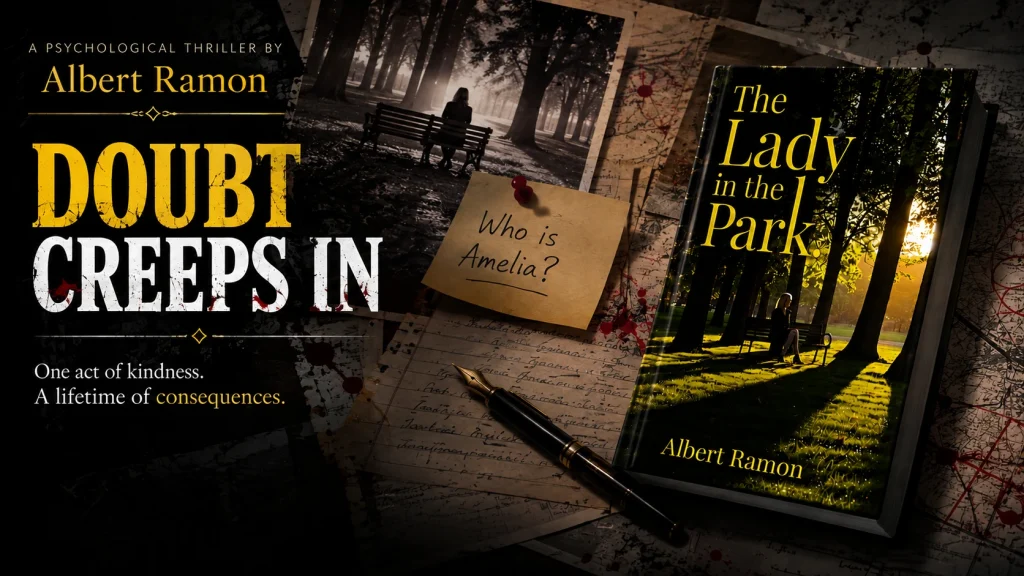
Albert Ramon spent most of his life fixing things, not writing about them. At Author Albert Ramon, that’s the story people love most: a man who never planned on becoming a novelist somehow ends up behind one of the most talked about woman in park psychological thriller book releases this year. He didn’t chase a writing career. Writing found him, late, quietly, almost by accident. So before getting into the book itself, it helps to understand the man behind it, because his path there is honestly stranger than the plot. In fact, most readers assume he trained as a journalist or a playwright first. He didn’t. He trained with his hands, and that detail matters more than it seems.
How A Clockmaker’s Patience Built A Woman In Park Psychological Thriller Book
Long before any of this, Albert trained as a clockmaker. Then the army called, and he served in Cyprus and North Africa, which changed how he saw people entirely. Later, he worked as a sewing machine engineer, then as a contract monitoring officer for a local council. Odd resume for a future novelist, isn’t it? But each job taught him something about patience, about watching closely before judging anyone. That habit eventually became the backbone of The Lady in the Park, and it’s a big part of why this debut is getting more attention than most first novels do. So instead of chasing plot twists for their own sake, Albert built the story the way he once built mechanisms, slowly, with every part checked twice before it moved forward.
A Mentor Named Patience
Albert never had a famous writing mentor. Patience itself taught him instead. Clockmaking demanded it, the army demanded it, and eventually, storytelling demanded it too. By the time he sat down to write, he already understood pacing better than most first-time novelists do. That’s a big reason the book reads less like a park based murder mystery lady book rushing toward a twist and more like a slow, deliberate unraveling. Every detail earns its place before the next one arrives. Also, because he came to writing later in life, he wasn’t afraid to slow a scene down. Most new authors rush. Albert simply doesn’t.
Dyslexia Became An Advantage
Growing up, Albert struggled with dyslexia, and reading didn’t come easily. So he leaned on observation instead. He watched faces, noticed silences, picked up on small details other people walked right past. That habit shaped a narrative style now compared to a crime story book lady in a park, one built on tension rather than shock value. Years of quiet watching gave him a full cast of believable characters long before he ever wrote a single sentence. Because he’d spent decades reading people instead of pages, his characters feel oddly real, almost uncomfortably so.
From Private Notes To A Full-Length Story
Eventually, all that observation needed somewhere to go. Albert started jotting things down, mostly for himself at first. Those notes slowly grew into something bigger, something that felt like a genuine thriller book lady alone in the park scenario he couldn’t stop turning over in his head. At Author Albert Ramon, readers now describe it as one of the more grounded debuts they’ve come across in years. The premise is simple enough: a decent man stops to help a stranger on a park bench. One small act of kindness sets everything else in motion, and nothing after that stays simple. Meanwhile, the setting itself does a lot of quiet work. A park bench isn’t scary. That’s exactly the point.
Inside The Lady in the Park
The story follows Graham, an ordinary man, and Amelia, a woman who isn’t quite what she seems. Their meeting starts small, almost forgettable. But trust, once given, gets fragile fast, and every conversation after that carries more weight than the last one did. Set in a quiet English town, the novel leans on atmosphere over violence, which honestly feels rare these days. Readers hunting for the best thriller book of the lady by Albert often expect fireworks early on. This one waits instead, and that patience is exactly what makes it work. Otherwise, it would just be another thriller with a loud ending and nothing underneath it.
Where It Ranks Among Top Psychological Thriller Mystery Books
Among top psychological thriller mystery books published recently, this one stands out for a simple reason: it trusts its reader. Albert never overexplains a twist, and that confidence shows in nearly every chapter. Plus, the pacing never drags, so nothing feels wasted or rushed. Some critics are already comparing it to slow-burn classics, calling it one of the stronger park based murder mystery lady book entries in recent memory. Others just call it a crime story book lady in a park done right, patient and emotionally honest instead of shock-driven. Either way, it’s climbing lists fast for a debut novel. First-time authors rarely get compared to genre classics this early. So that alone says something.
Why It Lingers
Most thrillers fade the moment you close the last page. This one doesn’t, mostly because Albert never rushes toward answers. He lets discomfort sit a while, which is unusual for a thriller book lady alone in the park style story. Reviewers keep calling it the best thriller book of the lady by Albert has attempted so far- bold praise for a first novel, but the craftsmanship backs it up. Instead of a big twist at the end, readers get something quieter: a lingering sense that they missed something the first time through. Second reads, apparently, reveal even more.
Conclusion
In the end, Albert Ramon spent decades watching people before he ever wrote a word about them, and that patience is exactly why this woman in park psychological thriller book feels so believable. It never rushes, never overexplains, and never forgets that ordinary places can hide the most uncomfortable truths. If you’re after a slow burn that earns every twist, Author Albert Ramon is a good place to start looking. Find a quiet bench, pick up a copy, and see how long it takes before you start glancing over your shoulder.
Frequently Asked Questions
Q1: What is this woman in park psychological thriller book about?
It follows Graham, a kind stranger whose one small act of decency spirals into something far more dangerous than he expected.
Q2: Is Albert Ramon a new author?
Yes, this is his debut novel, though his life experience runs far deeper than most first time writers bring to the page.
Q3: Does the book rely on graphic violence?
No. Tension builds through silence, character, and slowly shifting trust instead of shock scenes.
Q4: Where can readers learn more about the author?
The official Author Albert Ramon site has his full background along with details about the book.